Storm Cleanup in Santee, CA: What to Do With Wet Carpet, Mattresses, and Soaked Furniture
Storm Cleanup in Santee, CA: What to Do With Wet Carpet, Mattresses, and Soaked Furniture
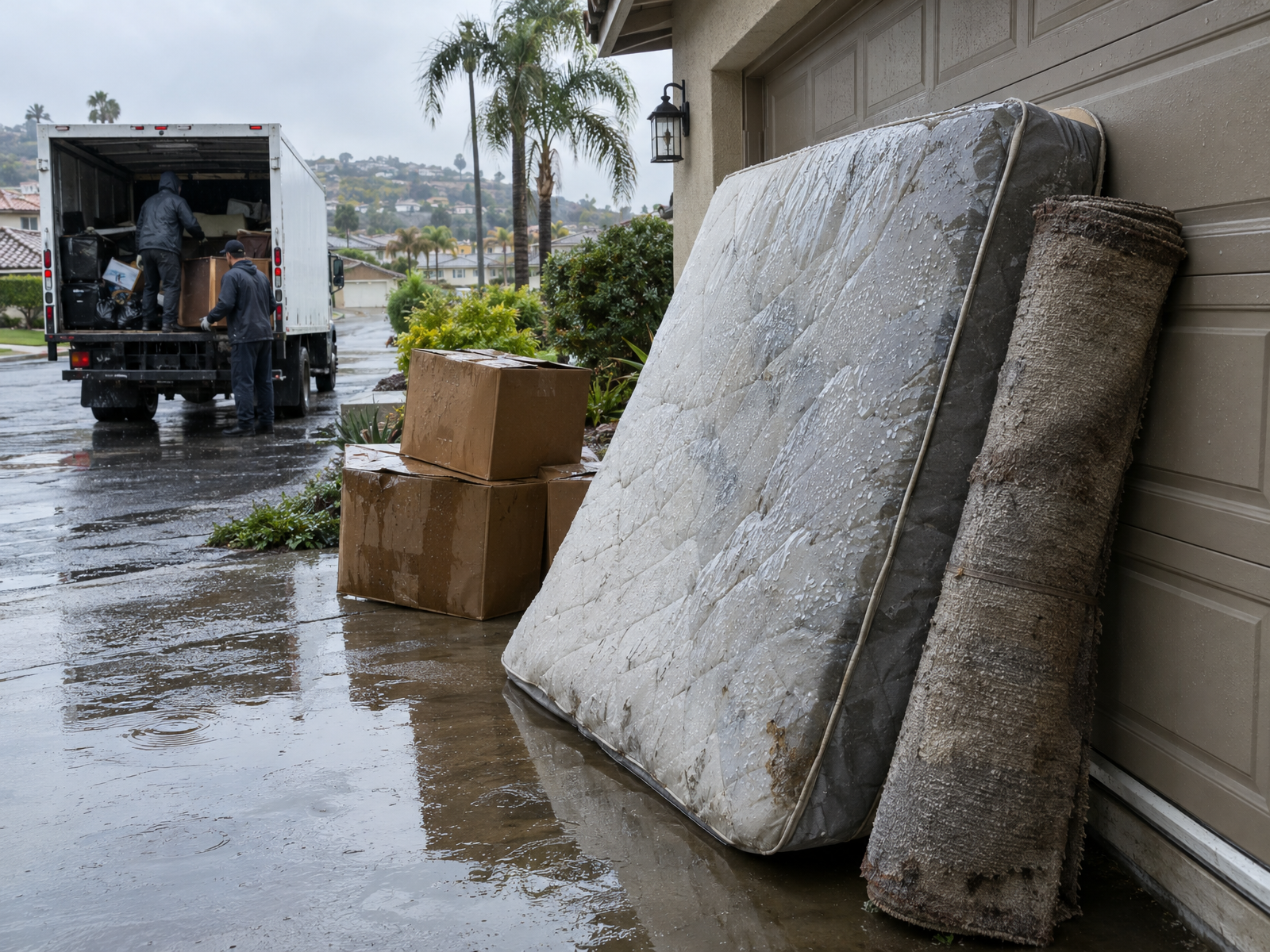
Got a soaked mattress, wet carpet, or a pile of ruined boxes in the garage after the storm?
Call Santee Junk Removal at (619) 792-1285 or text us photos for a free quote. We haul it all in one visit.
The remnants of Tropical Storm Rachel brought the first major rain of California's water year to San Diego County. According to National Weather Service data reported by NBC 7, Santee picked up about 1.78 inches over three days, and FOX 5 tracked showers continuing after the heaviest rain passed. If a leaky roof, a flooded garage, or a soaked patio left you with wet belongings, here's how to decide what goes and what stays.
The 24 to 48 hour rule
The EPA and CDC both recommend drying water-damaged areas and belongings within 24 to 48 hours to limit mold growth. FEMA, summarizing the CDC and EPA guidance, puts the rule simply: anything wet with floodwater that can't be cleaned and dried completely within that window should be bagged, sealed, and taken outside. That window is a guideline, not a guarantee. Mold may still form if you dry something within 48 hours, and it won't always form if something stays wet longer.
If your wet items have been sitting for more than a week, assume the window has passed for anything soft.
What usually has to go
- Mattresses and pillows. They can't be washed and disinfected, and the CDC lists them among items to discard.
- Saturated upholstered furniture. The inside can't be dried reliably, so a soaked couch or armchair is usually a throwaway.
- Carpet and carpet pad. Porous materials can hold mold that's hard or impossible to remove, and the EPA notes they may have to be thrown away.
- Particleboard and MDF furniture. It swells when wet and doesn't recover.
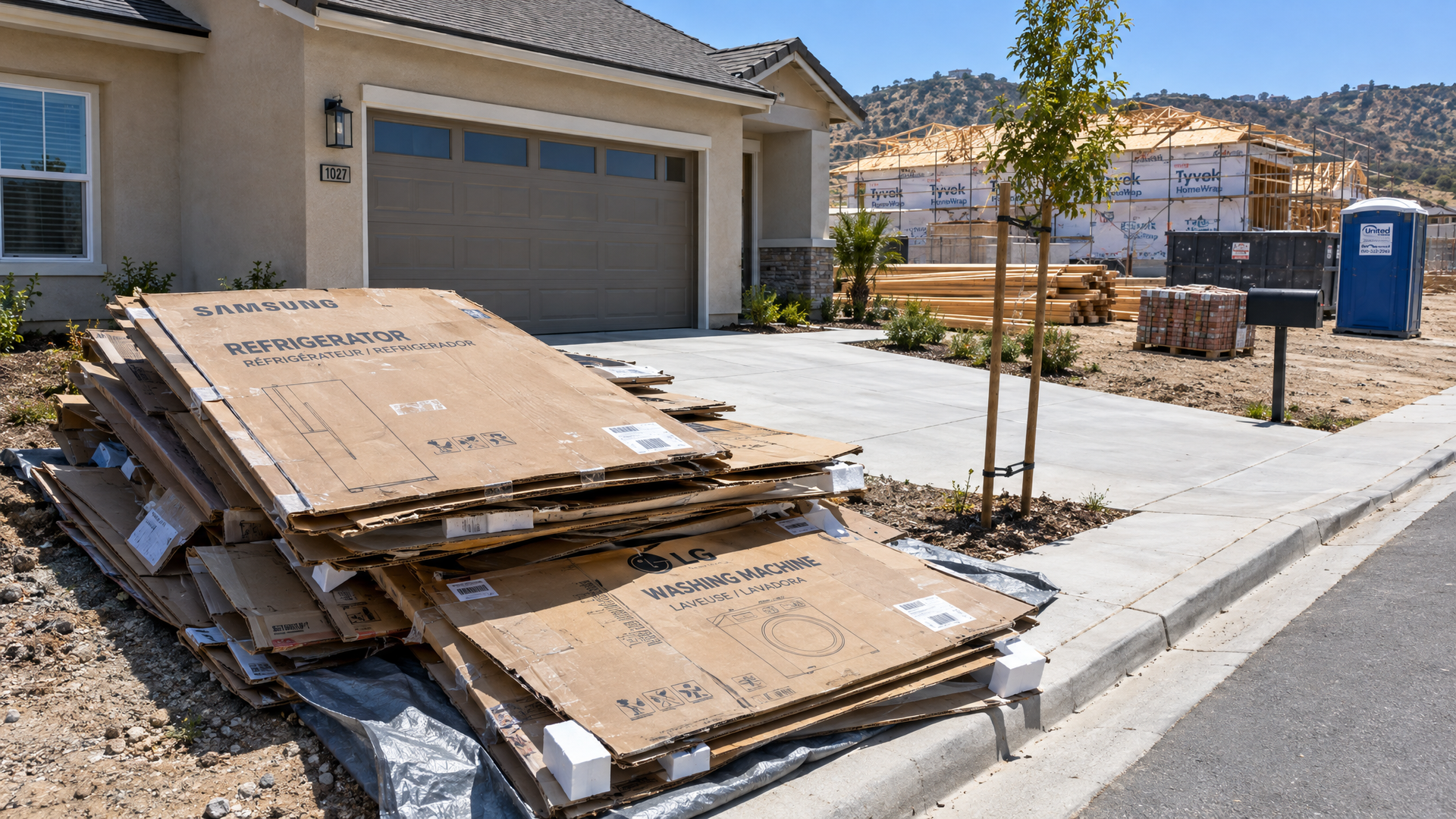
- Cardboard boxes and paper. They stay damp and grow mold fast. Pull out anything valuable first.
- Wet insulation and ceiling tile. These count as renovation debris. See our renovation debris guide.
What can often be saved
- Solid wood, metal, and hard plastic furniture, if it's cleaned, dried thoroughly, and not contaminated.
- Anything that dries fast in open air, like many hard-surface items.
- Valuables, photos, and documents. Separate them quickly and ask a specialist before deciding.
Take photos before you toss anything
FEMA's mold guidance says to photograph discarded items for insurance claims. Before anything leaves your property:
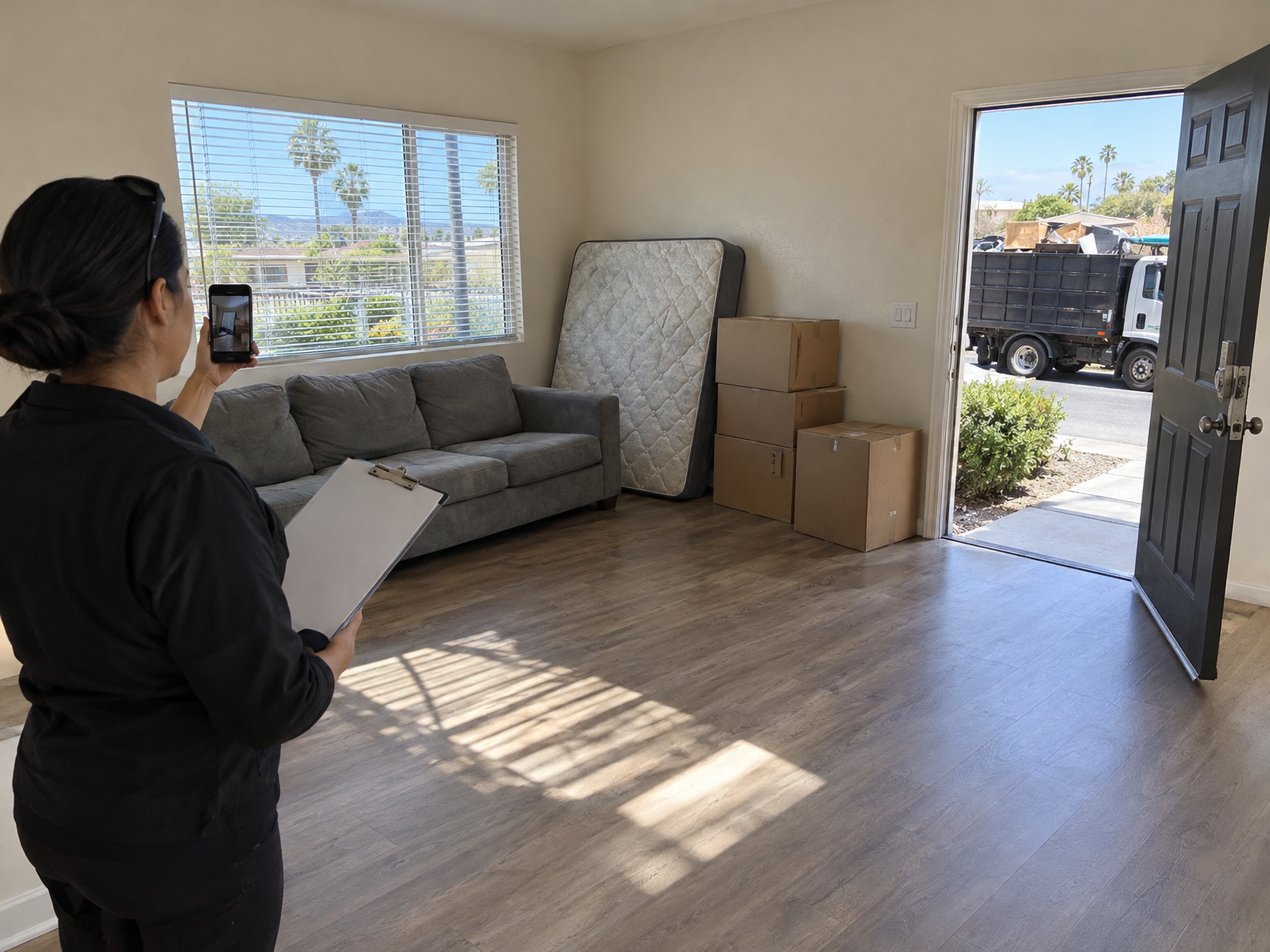
- Photograph and video the damage, wide shots of each room and close-ups of the items.
- Keep receipts for any emergency supplies, repairs, and replacements.
- Contact your insurer and ask whether it wants to inspect items or keep a sample, such as a piece of carpet.
- Then haul it out.
Policies vary, so ask yours what it expects before you throw away anything expensive.
When to call a professional first
Call a water-damage or restoration professional before you start hauling anything if:
- The water may have been contaminated, like sewage backing up.
- Mold has spread widely or is on walls or insulation.
- Water is inside walls, ceilings, or under flooring where you can't see it.
The CDC's guide to mold cleanup after disasters explains when to bring in help, and the EPA's guide to mold and moisture in your home covers the basics.
What else to check in the garage
Garages in places like Carlton Hills and Woodglen Vista take the brunt when water gets in. Look at what was sitting on the floor:
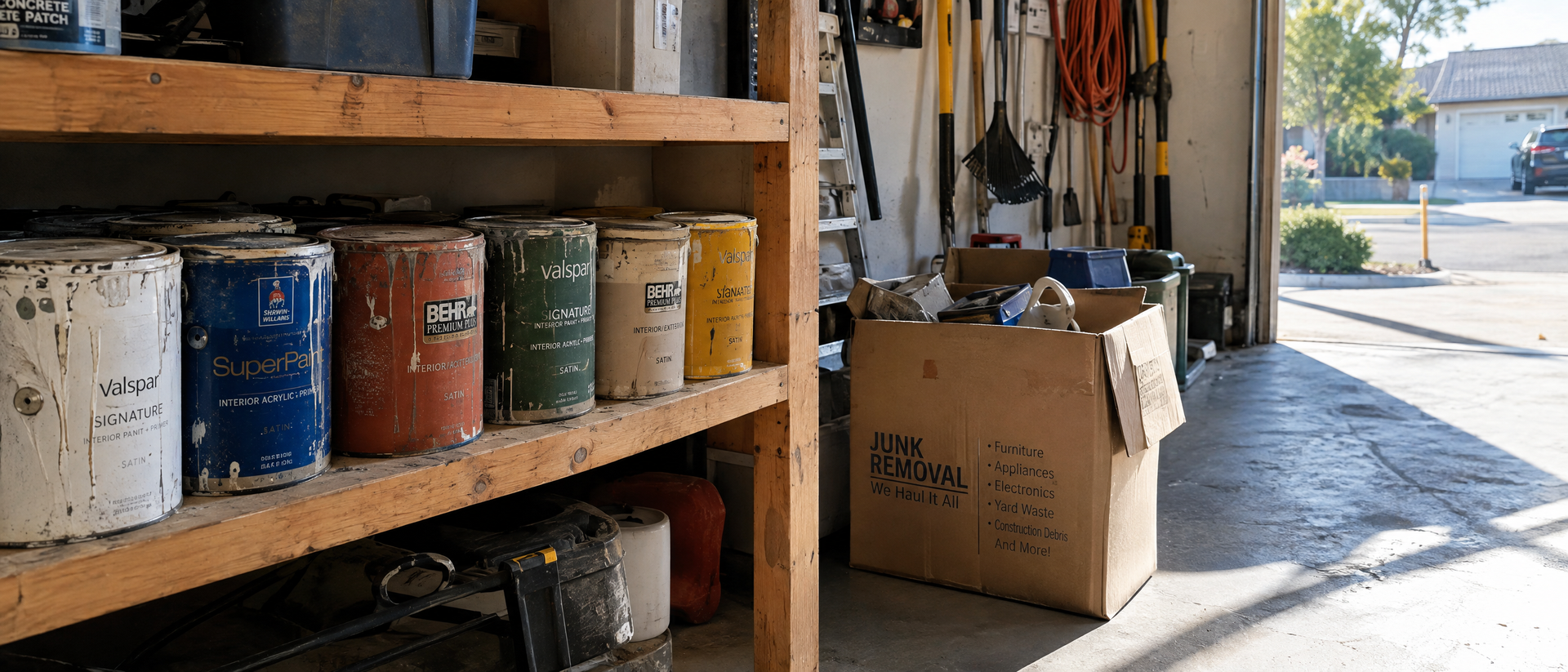
- Paint cans that got wet can rust and leak. See our paint disposal guide.
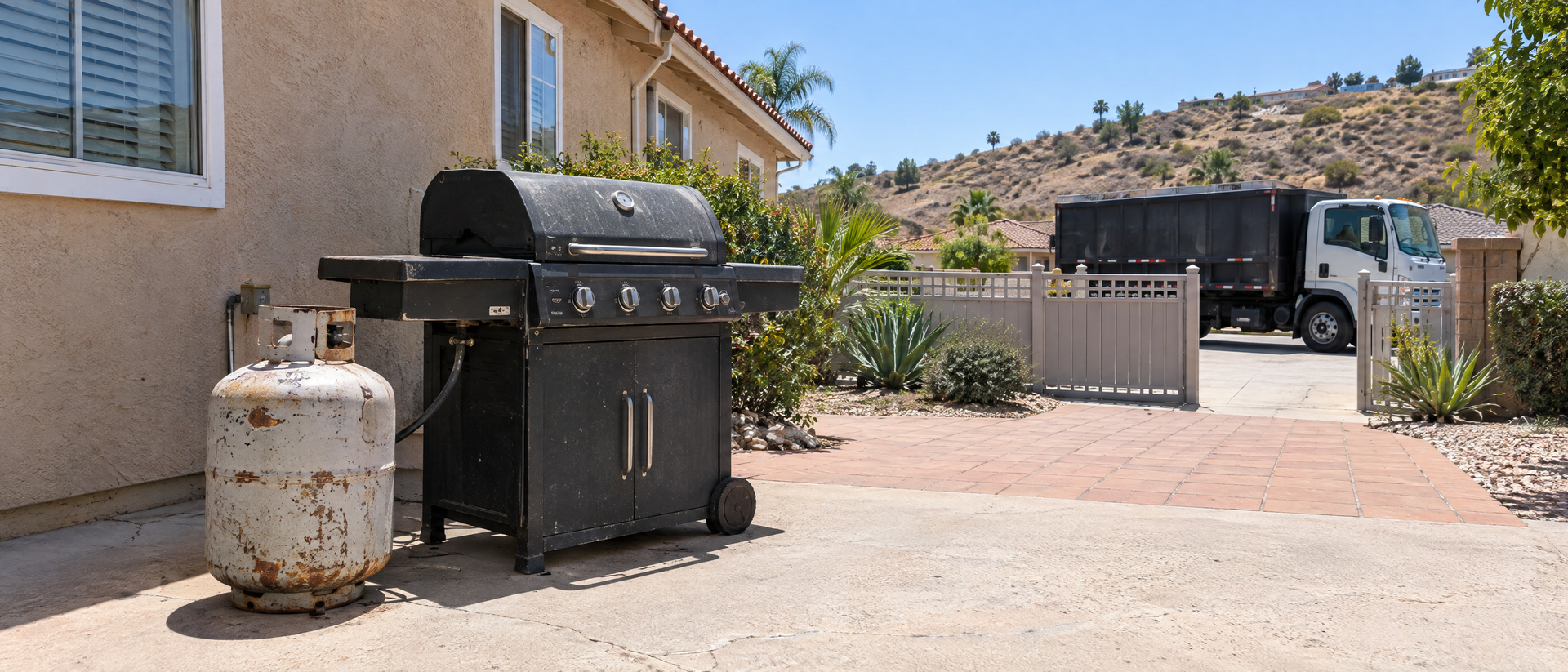
- Propane tanks should be handled carefully. See our propane tank guide.
- Electronics and cordless tools that got wet shouldn't go in the trash. See our e-waste guide.
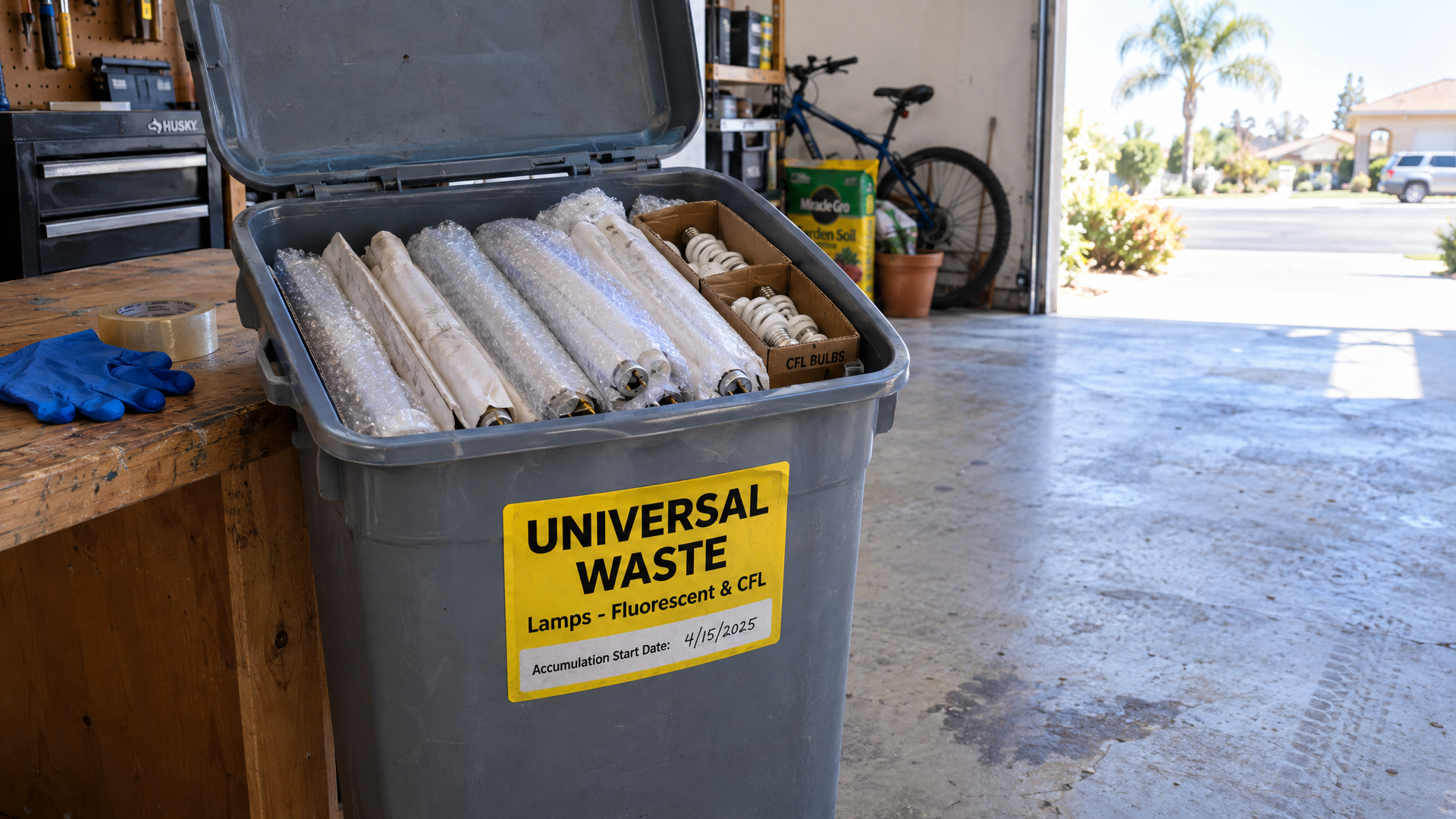
- Fluorescent tubes and bulbs have their own rules. See our bulb disposal guide.
- A refrigerator or freezer that was in standing water shouldn't be plugged in again. See our refrigerator disposal guide.
Storm debris in the yard
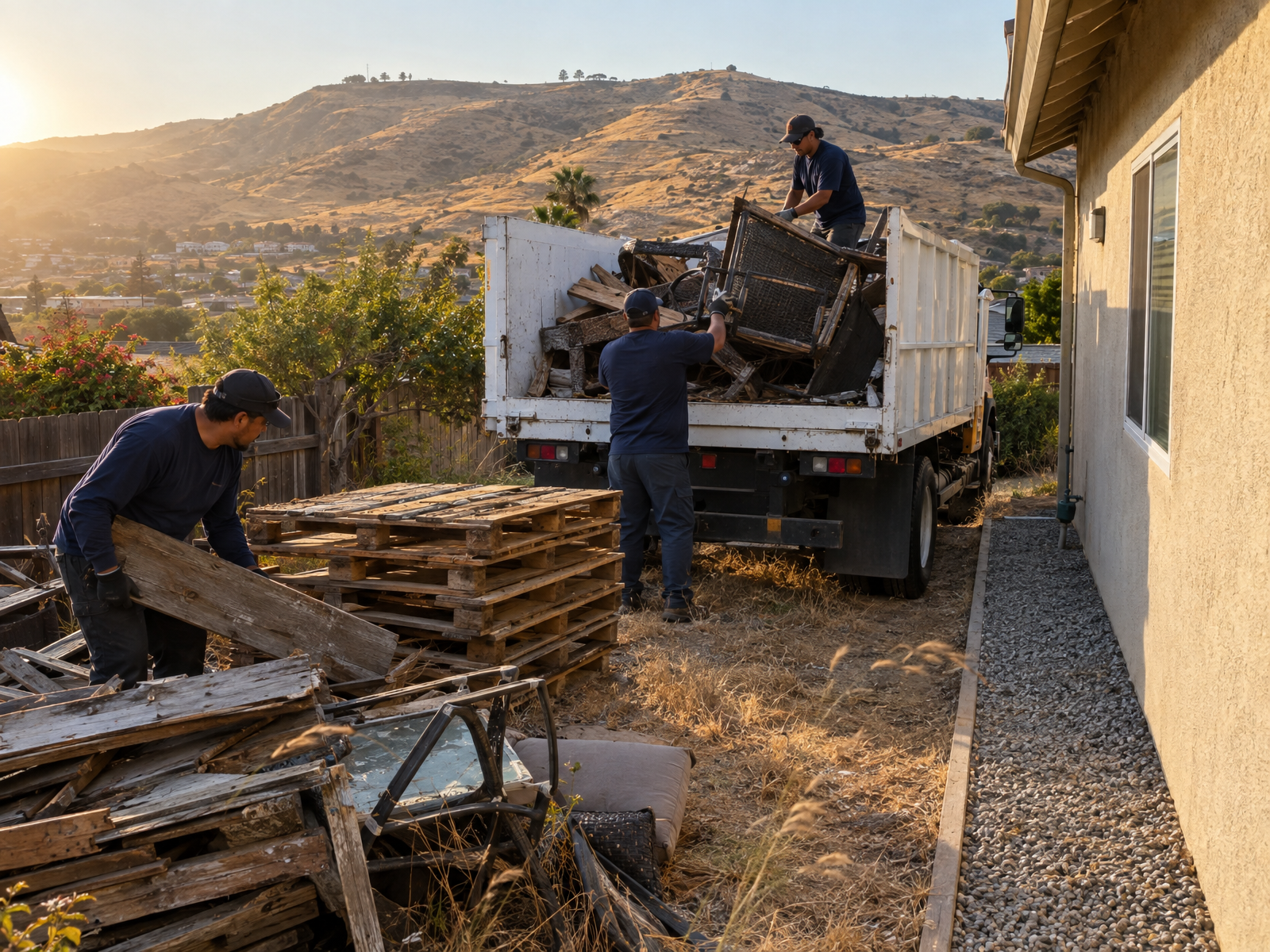
Branches, fence panels, and soggy yard waste are all part of the cleanup. Our yard waste service covers green waste, and if you just moved in, our guide for Fanita Ranch homeowners covers what new neighborhoods tend to collect.
How a storm-cleanup haul works
- Send photos. Text us pictures of the pile and we'll quote from them, with no visit needed first.
- Document first. Photograph it for your insurer, then leave the rest to us.
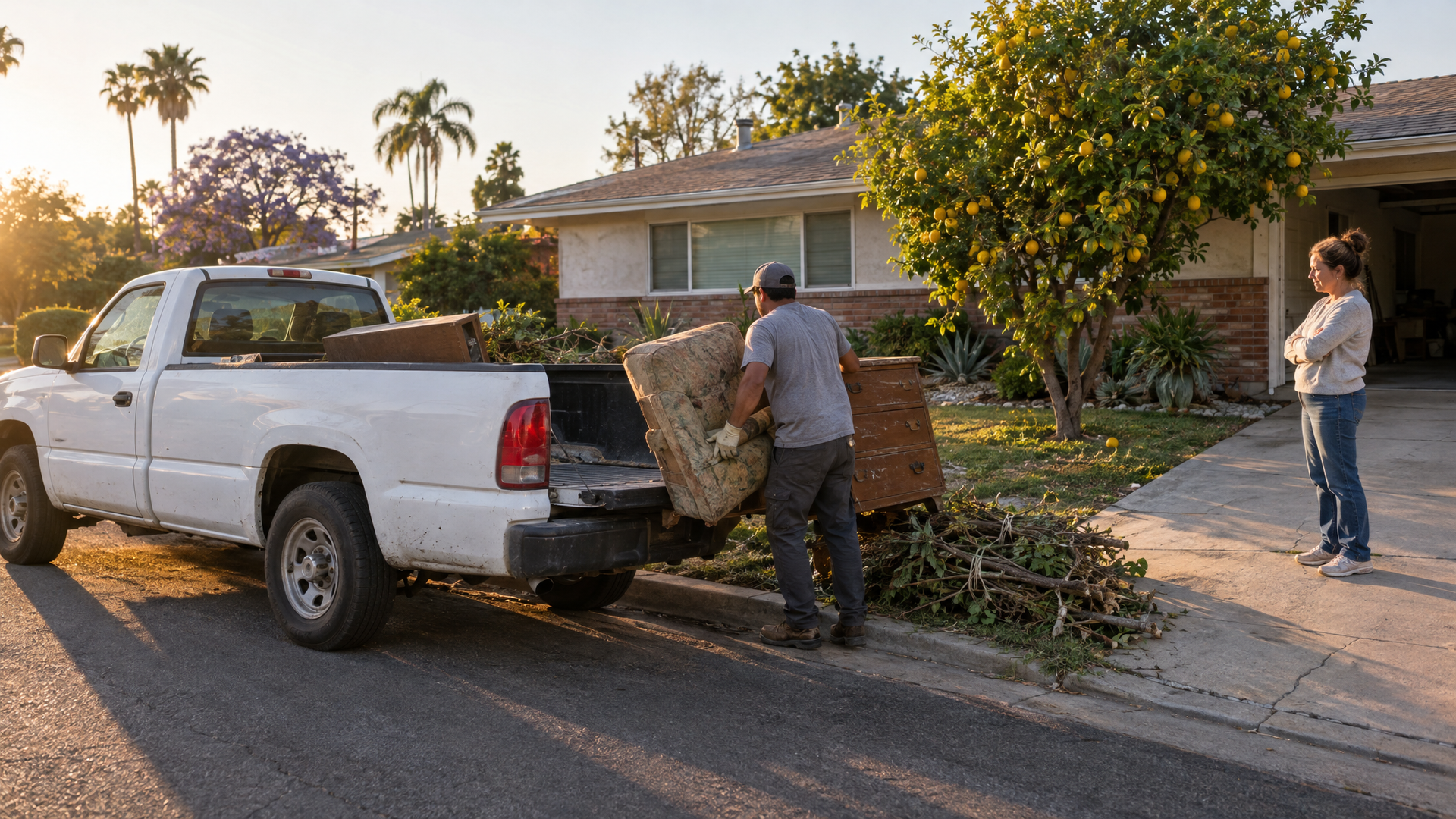
- One visit. We load everything, from the mattress to the carpet to the yard debris, and haul it away. See our same-day guide for what determines availability.
Questions about storm cleanup
How long do I have before mold starts?
The EPA and CDC guideline is 24 to 48 hours for wet materials to be dried or removed. After that, treat soft items as likely contaminated.
Can you take a wet mattress?
Yes. Wet mattresses, carpet, and furniture are all things we haul. Send a photo for a quote.
Do I need to keep the items for my adjuster?
Photograph everything first. Then ask your insurer whether it wants to inspect the items or keep samples, since policies differ.
Wet stuff piled up after the storm and ready to go?
Call Santee Junk Removal at (619) 792-1285 or text photos for a free quote.
We serve Santee, El Cajon, La Mesa, Spring Valley, Lakeside, and Lemon Grove.