Renovation Debris Removal in Santee, CA: What California's 65% Recycling Law Means for Your Remodel
Renovation Debris Removal in Santee, CA: What California's 65% Recycling Law Means for Your Remodel
Quick answer: Renovation debris — drywall, tile, lumber, concrete, old fixtures — isn't just regular household junk, and California law treats it differently. Under the state's CALGreen Building Standards Code, most permitted construction, demolition, and remodeling projects are required to divert at least 65% of debris away from the landfill through recycling, reuse, or salvage. That means how your junk removal company handles renovation debris actually matters, not just whether they haul it away.
If you're renovating anywhere from Carlton Hills to Fanita Ranch to Woodglen Vista, this is worth knowing before the dumpster fills up.
What Counts as Renovation Debris, and Why Is It Different From Regular Junk?
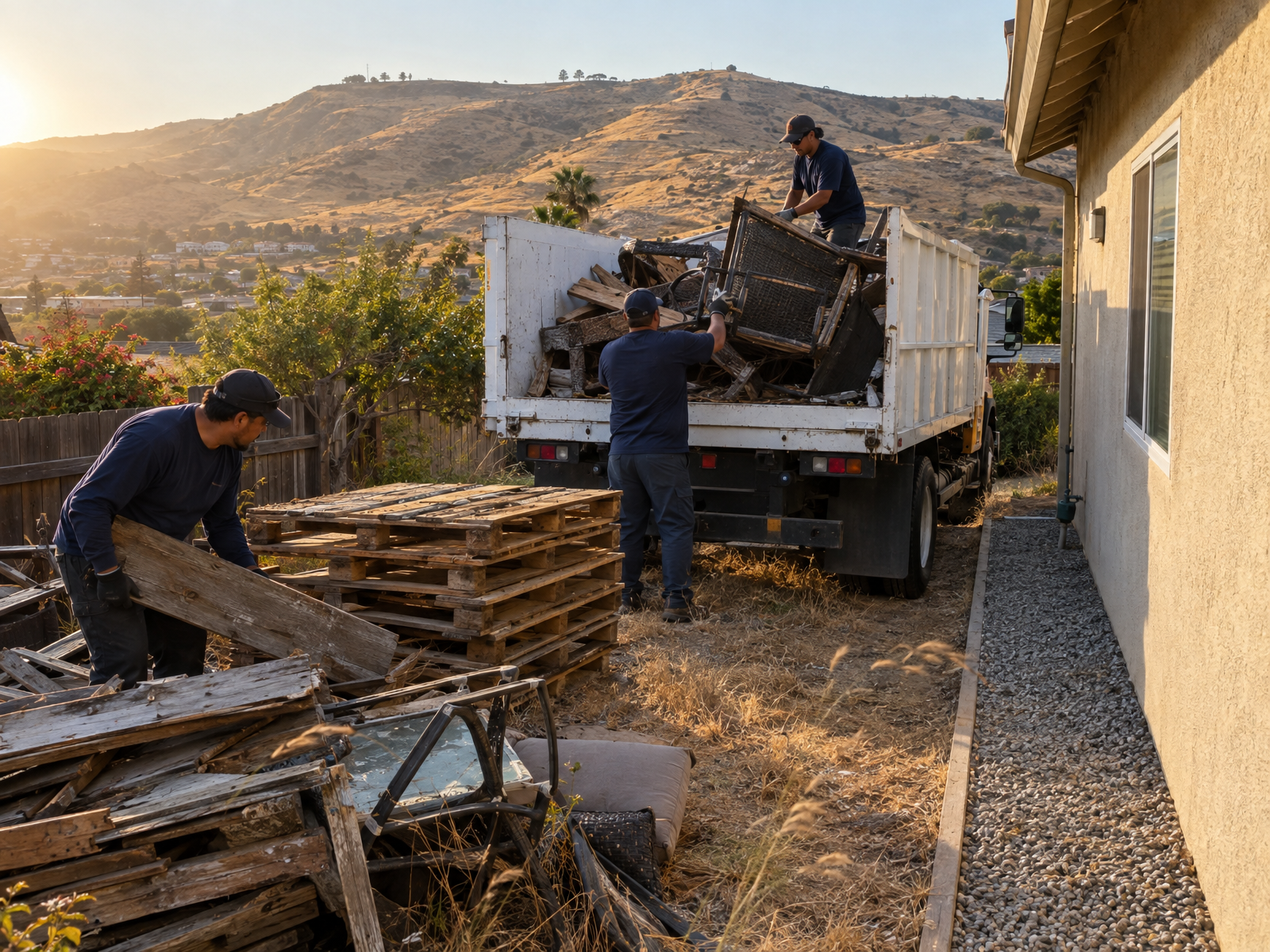
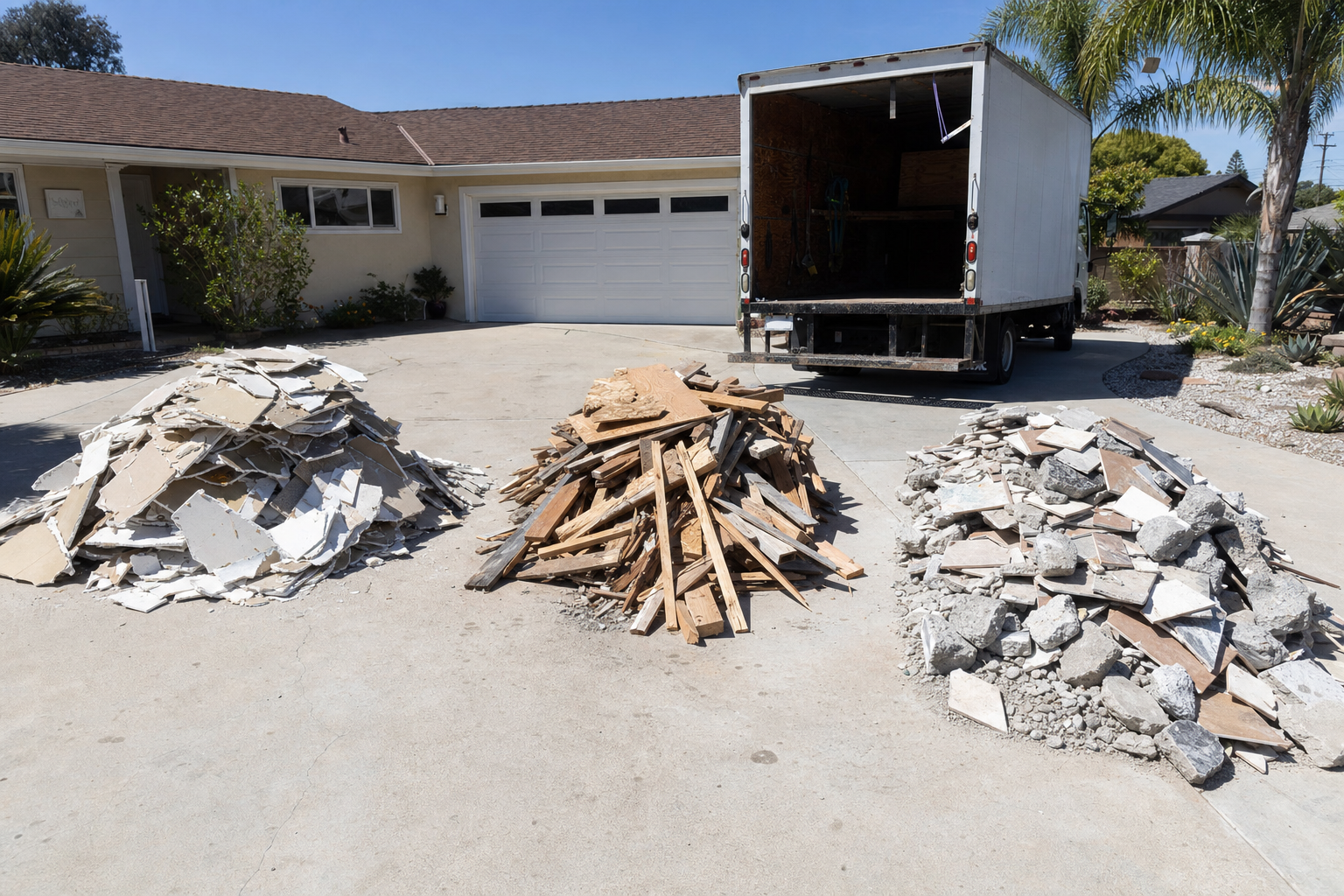
Renovation debris covers the materials generated by remodeling or demolition work — drywall, broken tile, old cabinetry, flooring, lumber, concrete and masonry chunks, plumbing fixtures, and similar construction-generated waste. It's fundamentally different from a garage cleanout or furniture haul in both volume and material type, and it's also treated differently under California law, which is why our renovation debris removal service exists as its own category separate from standard junk hauling.
Does California Actually Require Renovation Debris to Be Recycled?
Yes. Under CalRecycle and the state's CALGreen Building Standards Code (Section 5.408.1), most permitted new construction, demolition, addition, and alteration projects statewide are required to recycle or salvage a minimum of 65% of non-hazardous construction and demolition debris generated. San Diego County goes even further for larger projects: its own Construction and Demolition Debris Recycling Ordinance requires 90% of inert materials (concrete, asphalt, dirt) and 70% of all other materials to be recycled for qualifying projects. This isn't a suggestion — it's enforced through the permitting process, with documentation and weight receipts often required at final inspection.
Does This Apply to a Homeowner's Kitchen or Bathroom Remodel, or Just Big Commercial Projects?
This is worth understanding clearly. San Diego County's strictest ordinance-level requirements (the 90%/70% thresholds with a formal Debris Management Plan and Performance Guarantee) apply specifically to larger projects — generally 40,000 square feet or more, which covers major commercial and large-scale residential developments, not a typical kitchen or bathroom remodel. But the statewide CALGreen 65% diversion requirement applies more broadly to permitted residential construction, demolition, and alteration projects too. In practice, this means the responsibility for proper diversion often falls on whoever is managing the project — general contractor or homeowner — and on which hauler is actually handling the debris once it leaves your property.
Why Are Landfill-Only Haulers a Problem, Not Just an Inconvenience?
If your renovation is permitted and subject to CALGreen diversion requirements, using a hauler that sends everything straight to the landfill without sorting or documentation can leave you unable to demonstrate compliance at final inspection — a real problem if your permit is contingent on it. Beyond the compliance angle, materials like concrete, wood, and metal are highly recyclable and often have real salvage or recycling value that a landfill-only approach simply throws away. This is exactly the gap our eco-friendly junk removal service is built to close — sorting materials properly rather than treating every load the same.
What Materials Get Separated, and How?
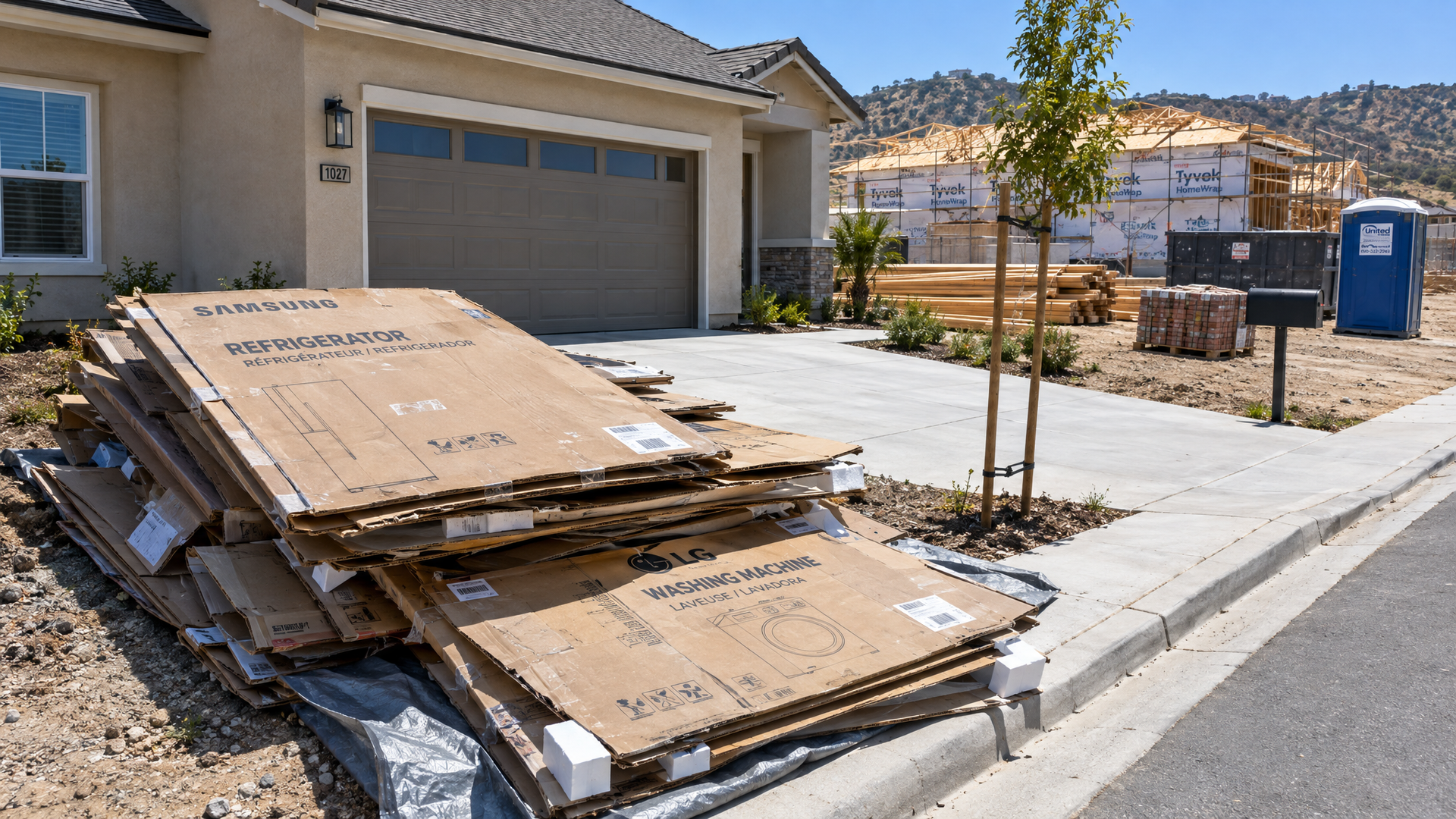
Renovation debris can be handled two ways: source-separated on site, where different material types go into separate piles or bins from the start, or commingled and sorted afterward at a recycling facility. Source separation is generally more cost-effective and yields higher recycling rates — often 90% or more — since materials arrive at the recycling facility already sorted rather than needing to be picked apart from a mixed pile. Common categories include inert materials (concrete, asphalt, brick), wood and lumber, metal, drywall, and cardboard packaging — each of which typically goes to a different recycling stream.
What Does Renovation Debris Removal Cost in Santee?
Cost depends primarily on volume and material type, since heavier materials like concrete and tile are priced differently than lighter debris like drywall or packaging:
- Single room remodel debris (bathroom, small kitchen): typically a partial truckload
- Full kitchen or multi-room renovation: often a full truckload or more
- Concrete, tile, and masonry-heavy demolition: priced with weight in mind given how much heavier these materials are per volume
- Whole-home renovation or gut job: quoted based on total scope, often requiring multiple loads
We provide a free, no-obligation quote before any work starts, and can advise on source-separation if you want to maximize your project's recycling documentation for permit purposes.
FAQ
Do I have to recycle debris from my own home renovation in Santee?
If your project is permitted, California's CALGreen code generally requires a minimum 65% diversion of construction and demolition debris from landfill disposal, though the documentation burden typically falls on whoever holds the permit.
What's the difference between source-separated and commingled debris?
Source-separated debris is sorted into different piles by material type on site, which generally yields higher recycling rates. Commingled debris is hauled as a mixed load and sorted afterward at a recycling facility.
Does a small bathroom remodel need to follow the same recycling rules as a big construction project?
The strictest county-level ordinance requirements apply mainly to large projects (40,000+ square feet), but the statewide CALGreen 65% diversion standard applies more broadly to permitted residential projects too.
Can I put renovation debris out for the city's free bulky item pickup?
No. City bulky item pickup programs like Santee's typically exclude construction and demolition debris entirely, which is one of the most common reasons homeowners need a professional hauler for renovation projects specifically.
How much does renovation debris removal cost in Santee?
Cost depends on volume and material type, with heavier materials like concrete and tile priced differently than lighter debris. We provide a free on-site or phone quote before any work begins.
Renovating in Santee, Carlton Hills, or Fanita Ranch?
Get renovation debris hauled and properly recycled.
Free quotes: (619) 792-1285.