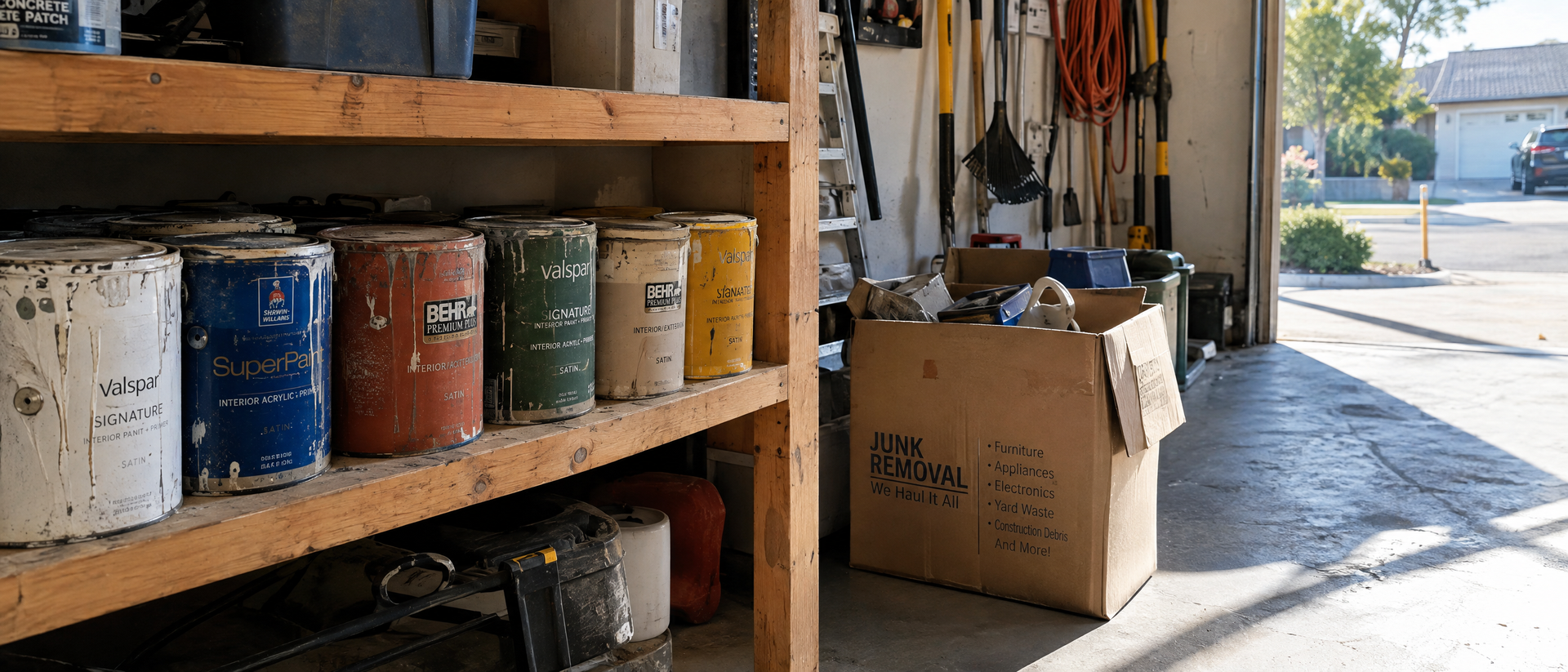
E-Waste Disposal in Santee, CA: Why That Old Cordless Drill Isn't Trash Anymore
That Old Cordless Drill in Your Garage? As of This Year, It's Not Trash Anymore
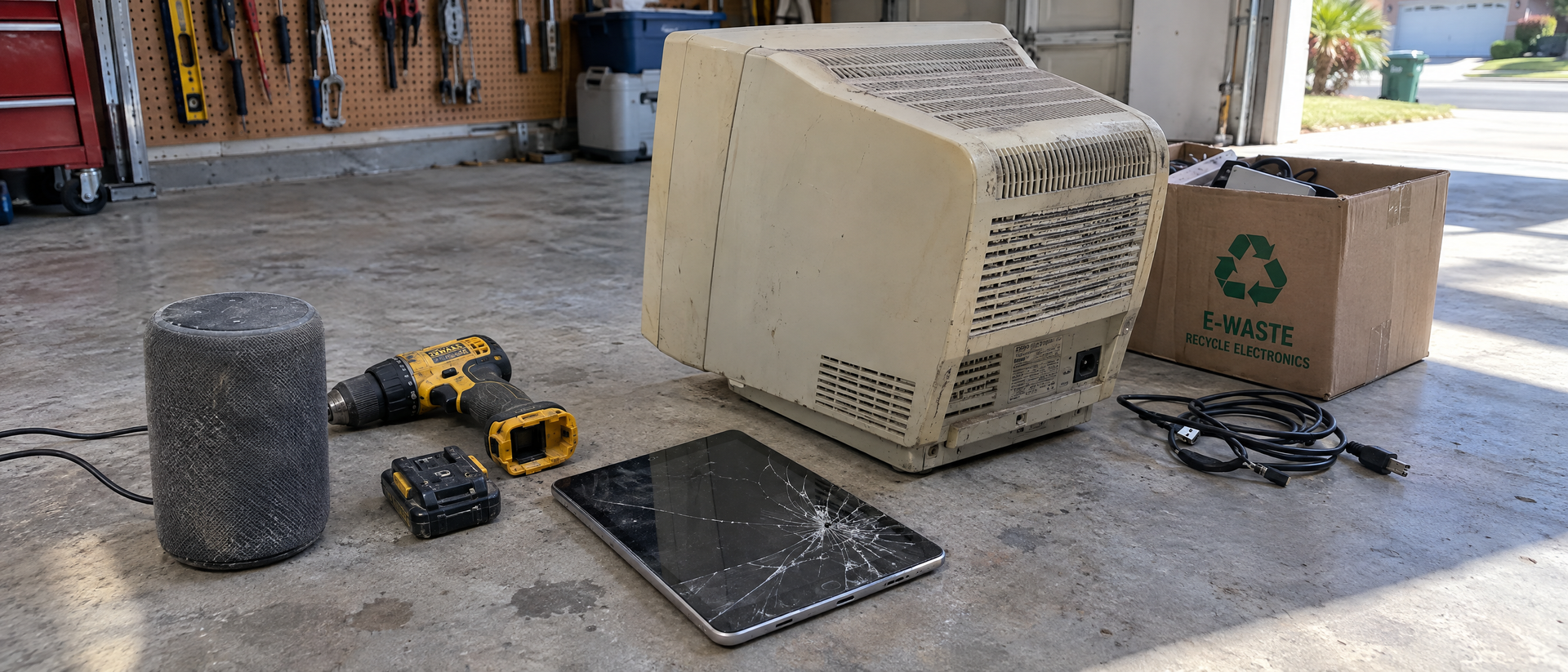
If you've got a dead smart speaker, a cordless drill that won't hold a charge, or a kid's electronic toy sitting in a junk drawer somewhere, here's something that changed on January 1, 2026: California expanded its e-waste law to cover battery-embedded products specifically. Under SB 1215, cordless tools, smart speakers, electronic toys, and small gadgets with built-in batteries now fall under the same disposal rules as TVs and computer monitors — meaning the trash bag they used to go in isn't actually the legal option anymore.
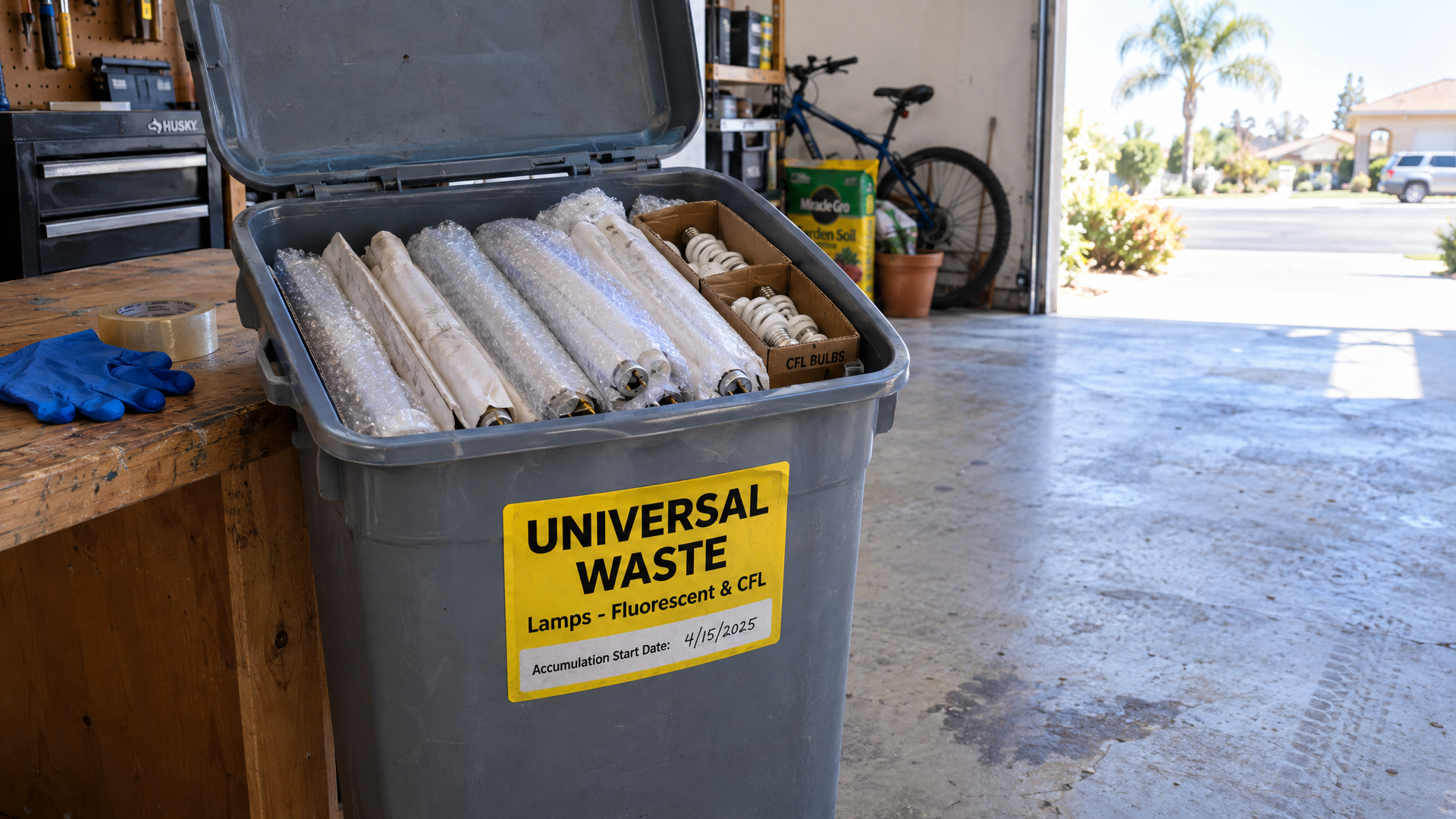
This builds on rules that have been around since 2003. California's Electronic Waste Recycling Act already banned tossing TVs, computer monitors, laptops, and tablets in regular trash, treating them as universal waste because of the lead, mercury, and cadmium packed inside. An old CRT television alone can carry 5 to 8 pounds of lead — which is exactly why the state doesn't want any of this ending up in a landfill where it can eventually leach into soil and groundwater.
Why Does California Treat Electronics as Hazardous Waste?
This isn't a bureaucratic technicality — the underlying chemistry is genuinely dangerous at scale. Circuit boards, batteries, and older display technology contain lead, mercury, cadmium, chromium, and flame retardants, all of which are classified as toxic materials once they break down.
A single old television isn't a meaningful environmental threat on its own, but multiply that across the millions of TVs, computers, and now cordless gadgets that get replaced every year, and the cumulative load of heavy metals is exactly the kind of thing landfill design was never meant to safely contain long-term. California's designation of e-waste as "universal waste" — a specific hazardous waste category with its own handling, transport, and disposal rules — exists because of that cumulative risk, not because any single device is especially dangerous by itself.
What Exactly Changed With SB 1215?
Before this year, the state's e-waste rules focused primarily on devices with display screens over four inches — televisions, computer monitors, laptops, and tablets. SB 1215 extended "covered electronic waste" specifically to battery-embedded products that don't have a screen at all:
cordless power tools, smart speakers, battery-powered toys, and similar small gadgets. This closes a real gap that existed for years — a dead cordless drill or a broken smart speaker wasn't technically covered under the older rules the same way a broken laptop was, even though it contains many of the same hazardous battery components. If you've been holding onto old cordless tools or smart home gadgets assuming they were just regular trash, this update is worth knowing about specifically because it's brand new and not yet common knowledge.
Here's the Part That Surprises Most People
You've actually already paid for this recycling. California collects a $6 to $10 advance recycling fee on covered electronics at the time of purchase, specifically to fund their eventual collection and recycling. That fee is sitting there whether you use it or not — recycling the device properly doesn't cost you anything extra on top of what you already paid when you bought it. In other words, throwing a covered device in the trash doesn't save you money; it just means the fee you already paid goes unused while the device itself becomes a landfill liability instead of raw material for a recycler.
What Actually Counts as E-Waste Now?
So what actually counts under the current rules? Basically anything with a plug, a battery, or a circuit board:
- Televisions of any type — LCD, LED, plasma, or older CRT models
- Computer monitors, desktops, and laptops
- Tablets and smartphones
- Printers, copiers, and fax machines
- Rechargeable batteries on their own
- As of 2026: cordless power tools, smart speakers, electronic toys, and other small battery-embedded gadgets
If you're not sure whether something specific qualifies, the plug-battery-circuit-board test covers the vast majority of cases correctly. When in doubt, treat it as e-waste rather than assuming it's fine for regular trash.
Why This Matters for a Bigger Cleanout, Not Just One Device
This is the same category of problem we've covered with old refrigerators and tires — items that look like ordinary junk but are actually regulated materials your regular trash hauler and Santee's bulky item pickup program simply won't take. If you're clearing out a garage that's accumulated a decade of old electronics, dead tools, and forgotten gadgets alongside furniture and general household junk, that's exactly the kind of mixed cleanout we handle as one job rather than something you need to sort into a dozen separate disposal trips yourself. A single garage cleanout can easily turn up a mix of covered e-waste, standard donatable furniture, and genuine trash all in the same afternoon, and separating that correctly on your own is a lot more work than having a crew that already knows the categories handle it in one pass.
Got a garage full of old electronics, tools, and gadgets that need to go?
We handle e-waste properly, not just the easy stuff.
Free quotes: (619) 792-1285.