Paint Disposal in Santee, CA: Why Your Garage Cans Might Be Illegal to Trash
Paint Disposal in Santee, CA: Why Your Garage Cans Might Be Illegal to Trash
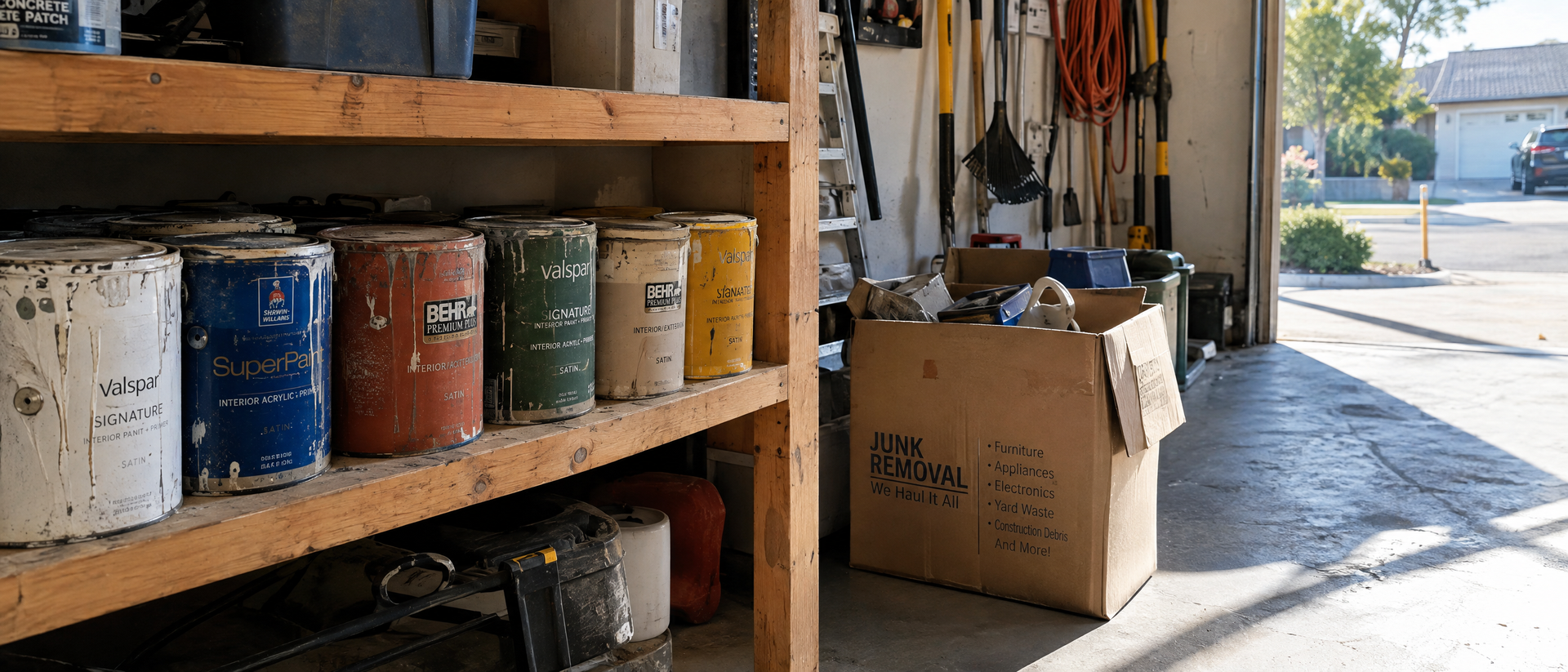
If you've got a shelf of half-used paint cans in your garage — some from a project three moves ago, colors you don't even remember choosing — there's a good chance you've been storing them correctly but have no idea how you're actually supposed to get rid of them once you're ready to. California treats paint differently than most states, and the "just let it dry out and toss it" approach that works plenty of other places doesn't reliably hold up here.
Oil-based paint, solvent-thinned coatings, and anything with residual product in an aerosol can are straightforward: these are hazardous waste, full stop, in every state including California. They can't go in the trash, and they absolutely can't go down a drain — doing so risks contaminating groundwater and local waterways, which is exactly the kind of environmental damage these rules exist to prevent.
Why Latex Paint Is Genuinely Confusing Here
Latex paint is where things get murkier, and it's worth getting right rather than guessing. Some California guidance says dried latex paint is fine in regular household trash. Other California-specific sources are explicit that latex is "presumed hazardous" in this state and that even paint you've dried out yourself still needs to go through a proper disposal channel, not the regular garbage. Given that inconsistency exists even among official-sounding sources, the safer and simpler approach is to treat all leftover paint — latex included — as something that goes through PaintCare or a household hazardous waste facility, rather than betting on which interpretation your specific local hauler happens to follow.
What PaintCare Actually Is, and Why California Built It
The good news is California made this genuinely easy back in 2010, when the state passed AB 1343 and created PaintCare — an industry-funded program, not a government bureaucracy, specifically built so getting rid of old paint wouldn't be a hassle. PaintCare is run by the American Coatings Association and funded through a small fee already built into the price of new paint, similar in spirit to the advance recycling fee already collected on electronics we've written about before. That means, much like e-waste, the cost of properly disposing of your paint has typically already been paid for at the point of sale — you're not being asked to pay twice.
There are now more than 800 PaintCare drop-off locations across the state, many at the same paint retailers where you'd buy a new can, and it's free — most locations accept up to five gallons per visit at no cost, regardless of where the paint was originally purchased. This isn't a program limited to California, either; PaintCare currently operates in eleven states plus the District of Columbia, but California was one of the earlier adopters, which is part of why the state's rules around latex paint specifically tend to be stricter than what you'd find somewhere without a program like this in place.
What PaintCare Actually Accepts
PaintCare's program covers most architectural paint products sold in containers of five gallons or less — this includes both latex and oil-based interior and exterior paints, primers, stains, and varnishes. What it generally doesn't accept: aerosol spray paints, empty containers (those can typically just go in regular recycling once fully dry), and paint products intended for industrial or non-architectural use rather than typical home painting projects. If you're not sure whether something specific qualifies, checking with your nearest drop-off location before hauling a full trunk of cans is worth the quick call.
Practical Steps Before You Haul Anything Anywhere
A few practical things worth knowing before you haul a garage full of cans anywhere: don't mix latex and oil-based paint together, ever — combining them can create a mixture that's harder to identify and dispose of correctly, and some facilities will refuse mixed containers outright. Keep containers sealed and upright until you actually reach a drop-off point, since a paint spill in a car trunk is a genuinely difficult mess to fully clean up. If a can is leaking or the lid doesn't seal properly anymore, a secondary container or sturdy bag prevents that mess from happening in the first place.
And if the paint is still genuinely usable — latex can last up to 10 years properly sealed, oil-based even longer — it might be worth keeping for a future touch-up rather than disposing of it at all. PaintCare itself recommends covering cans with plastic wrap under the lid, keeping them tightly sealed, and storing them upside down in a temperature-controlled space out of reach of children and pets, which genuinely extends how long a can stays usable before it's worth disposing of.
Why This Matters More During a Bigger Cleanout
If you're dealing with paint cans as part of a bigger cleanout — a garage purge, an estate cleanout, or clearing out a property before a sale — this is exactly the kind of item that's easy to overlook until you're standing in front of a dozen cans wondering what to do with all of them at once. A property that's changed hands a few times, or one that's been in the same family for decades, often turns up paint cans spanning years or even generations of previous projects, some clearly labeled and some not. Sorting hazardous materials like paint out from everything else that's genuinely fine for standard donation or disposal is part of what a proper cleanout actually involves, not an afterthought tacked onto the end.
Clearing out a garage full of old paint cans along with everything else? We sort it properly, not just haul the easy stuff.
Free quotes: (619) 792-1285.