Piano Removal in Santee, CA: Why It Weighs More Than You Think
Piano Removal in Santee, CA: Why It Weighs More Than You Think
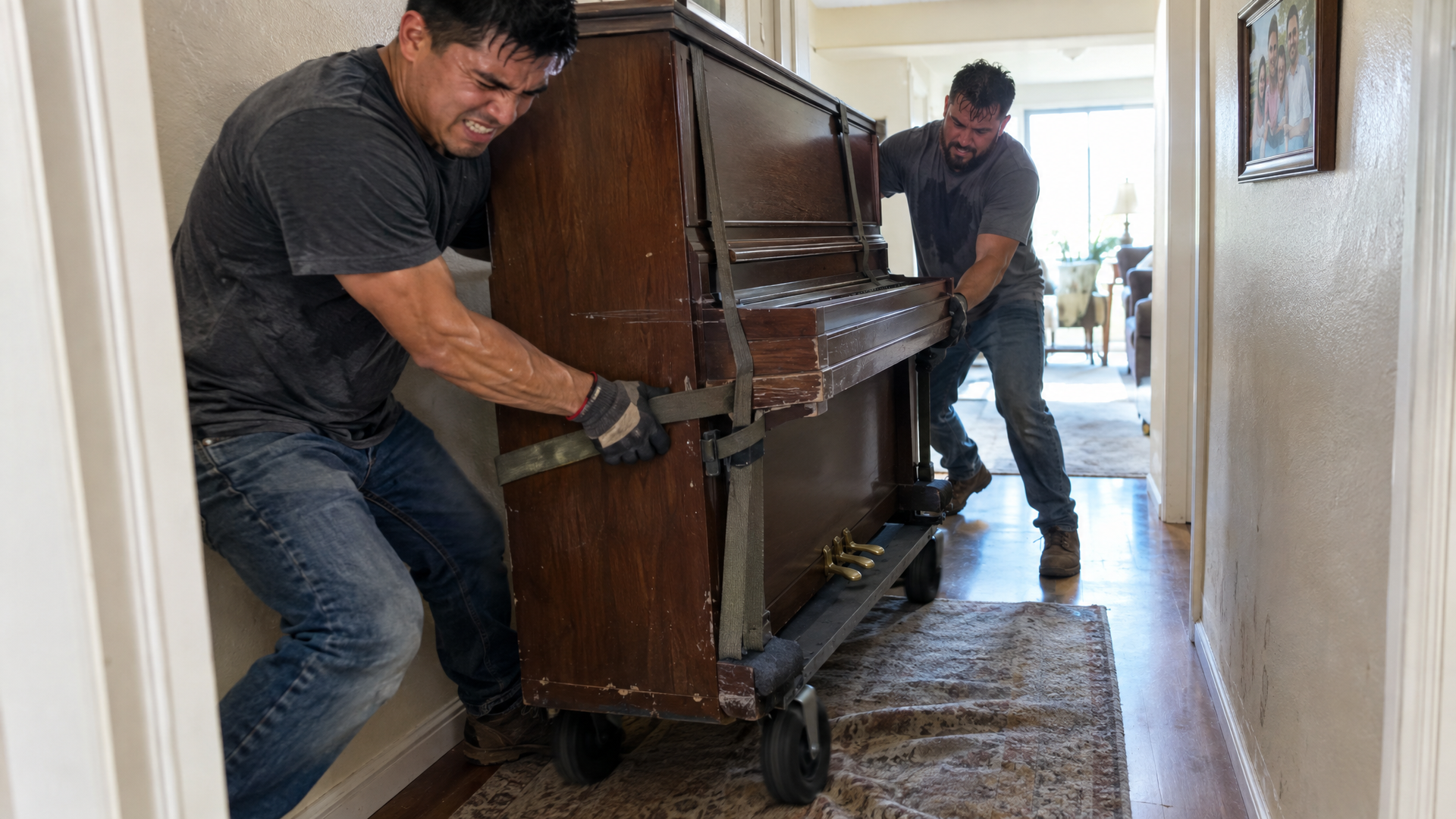
Somewhere in a lot of Santee homes there's a piano nobody's touched in years. The kids who took lessons moved out. It came with the house, or with a parent's estate. It's furniture now, in the way, and every plan to "just get rid of it" runs into the same wall: it doesn't move like furniture.
An upright piano weighs 300 to 500 pounds. A baby grand runs 500 to 600. A full grand piano can top 1,200 pounds, with a cast iron plate inside accounting for a third of that weight on its own. None of that is evenly distributed, and none of it comes apart into pieces two people can carry. That's the actual reason piano removal costs more than a couch or a mattress — it's not a bigger version of the same job, it's a different job.
Why the DIY Route Usually Costs More Than It Saves
Breaking a piano down yourself with a sledgehammer and pry bar is a real option people consider, and it typically runs two to four hours of hard labor under wire tension and awkward leverage, with real risk of a crushed finger or a back injury for the trouble. Add up a truck rental, moving equipment, and a landfill disposal fee, and the DIY version frequently lands close to what a professional crew would have charged to just take the whole thing intact — minus the labor, the hours, and the risk.
Regular trash pickup won't take a piano regardless of which route you choose. The weight puts it outside what a standard collection truck and crew handle, and it's commonly excluded from city bulk item programs for the same reason — worth checking directly if you're hoping to avoid a haul-away fee entirely, since rules vary by program and the wait for an accepted slot can run weeks.
Location in the House Changes Everything
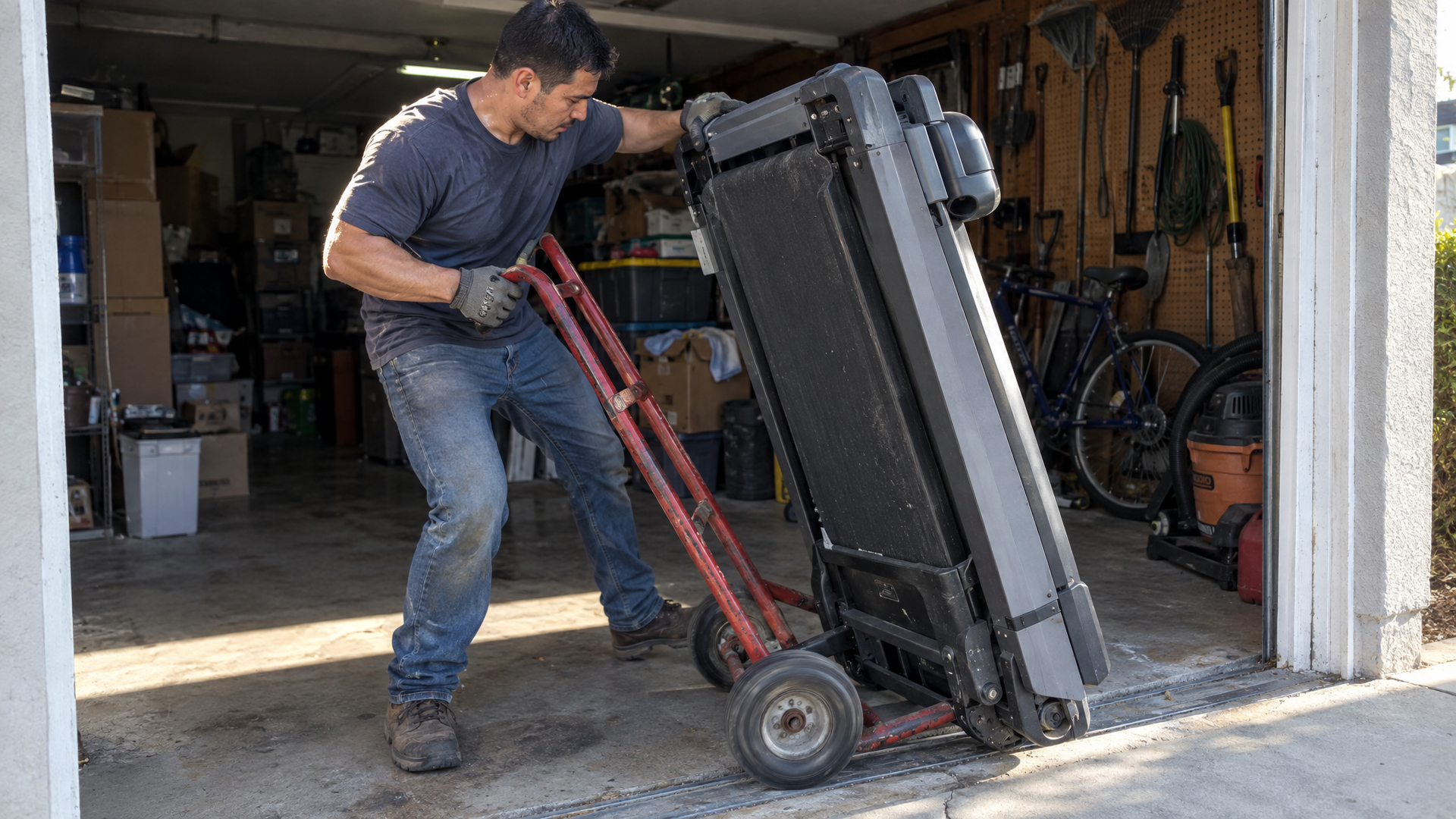
An upright on a ground floor with a clear path to the door is a straightforward job. The same piano in a basement, up a narrow staircase, or in a room with a tight doorway takes more people, more equipment, and more time — and the price reflects that difference, not the piano itself. A grand piano adds its own complexity on top of that, since the legs, lid, and pedal lyre are often removed for transport and the body has to be moved on its side with specialized equipment most people don't own and shouldn't be improvising with.
Donation Is Worth Checking First
If your piano is still in playable condition and reasonably recent — generally under 20 to 30 years old — donation is worth a look before you write it off as disposal. Schools, churches, and community organizations sometimes take a working piano off your hands for free, and some donation programs offer a tax deduction on top of that. The tradeoff is time: coordinating a donation pickup takes longer than a same-day haul-away, and plenty of organizations are selective about what they'll accept given how much space and tuning cost a piano represents for them too.
Getting It Out of the House the Right Way
If donation isn't realistic or the piano's beyond playable condition, a full-service pickup handles the weight, the disassembly if needed, and responsible disposal in one visit — the same approach we bring to any garage cleanout or estate cleanout where a piano turns up alongside everything else. We bring the manpower and equipment a piece this size actually requires, so it comes out without damaging your floors, your walls, or your back in the process.
Finally ready to get that piano out of the house? Free quotes: (619) 792-1285.