Propane Tank Disposal in Santee, CA: Why "Empty" Tanks Still Explode
The Propane Tank in Your Garage Isn't as Empty as You Think
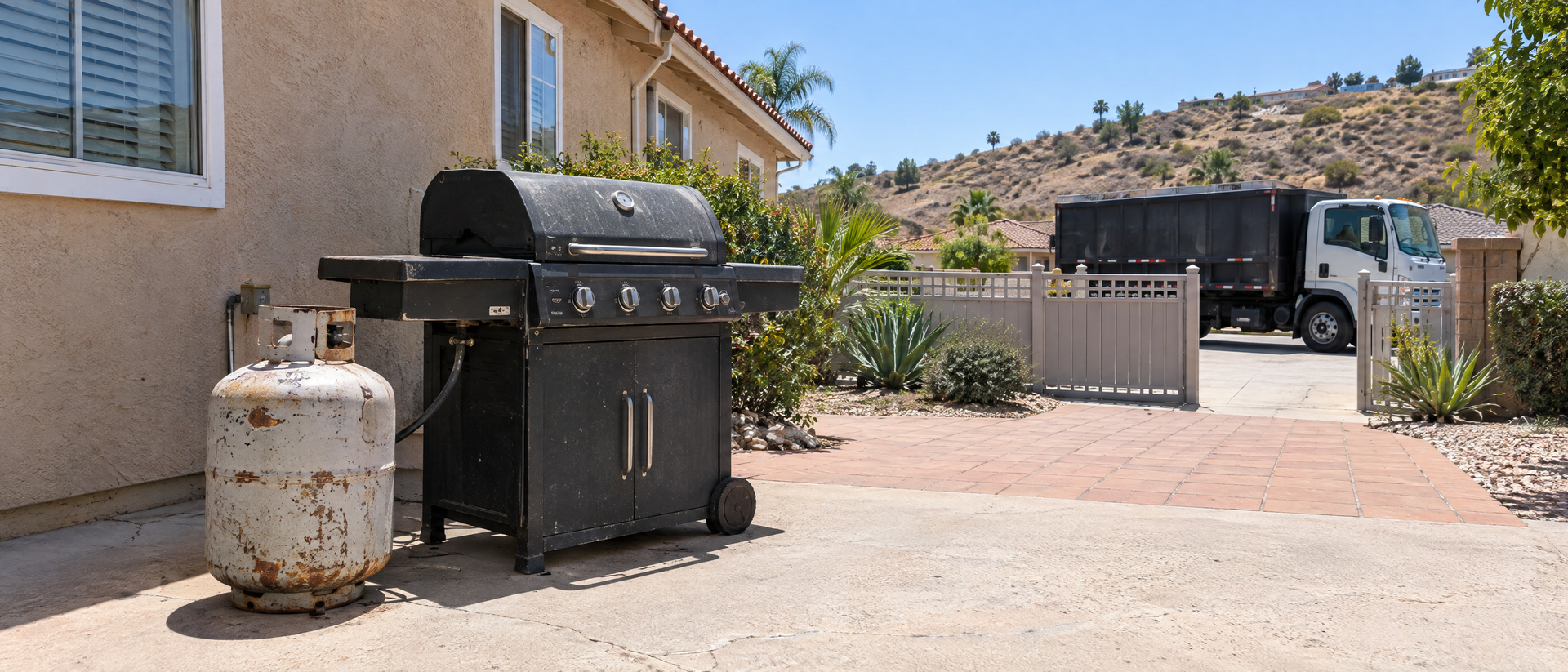
If there's an old propane tank sitting in your garage or backyard from a grill you don't use anymore, here's the thing most people don't realize: even a tank that feels empty almost never actually is. Residual gas and pressure stay trapped inside long after the flame stops, and that's exactly why a propane tank tossed in with regular trash or curbside recycling is a genuine fire and explosion risk — not a technicality, an actual physical hazard for the sanitation worker compacting that truck.
This is different from most of what we've covered before with regulated disposal items. It's not really about paperwork or environmental fines — it's about the fact that a pressurized tank getting crushed inside a garbage truck's compaction mechanism can ignite. The Department of Transportation classifies propane as a hazardous material for exactly this reason, and curbside waste collection is legally prohibited from taking it, the same way it's prohibited from taking a lot of the other hazardous materials we've covered.
California has also moved specifically on this front — SB 1280 restricts single-use propane cylinders directly, part of a broader push to reduce the number of disposable tanks entering the waste stream in the first place, since properly recycled steel from these cylinders has real material value that gets wasted entirely once a tank ends up crushed in a landfill.
What Actually Counts as "Not Safe to Trash"
Both disposable 1-pound camping-style canisters and standard 20-pound BBQ tanks fall under the same basic rule: never in regular trash, never in curbside recycling, never punctured or incinerated yourself. The size doesn't change the underlying danger — a small canister that feels spent can still ignite under the wrong conditions, and a hammer-and-nail approach to draining one yourself is exactly the kind of DIY shortcut that occasionally makes local news for the wrong reasons.
Where Propane Tanks Actually Go
A few legitimate paths exist, and which one makes sense depends mostly on the tank itself. Standard 20-pound BBQ tanks can often go straight to an exchange kiosk — Blue Rhino or AmeriGas locations at Home Depot, Walmart, or Lowe's will take an old tank in exchange for a filled one, no disposal fee involved. Your county's Household Hazardous Waste facility accepts propane tanks free of charge for residents, and in many cases staff will handle unloading it directly from your vehicle without you needing to touch it further. A local propane retailer or supplier may also take old tanks back directly, and once a tank has been properly depressurized, a scrap metal yard can take it for its steel value.
Where Junk Removal Fits Into This
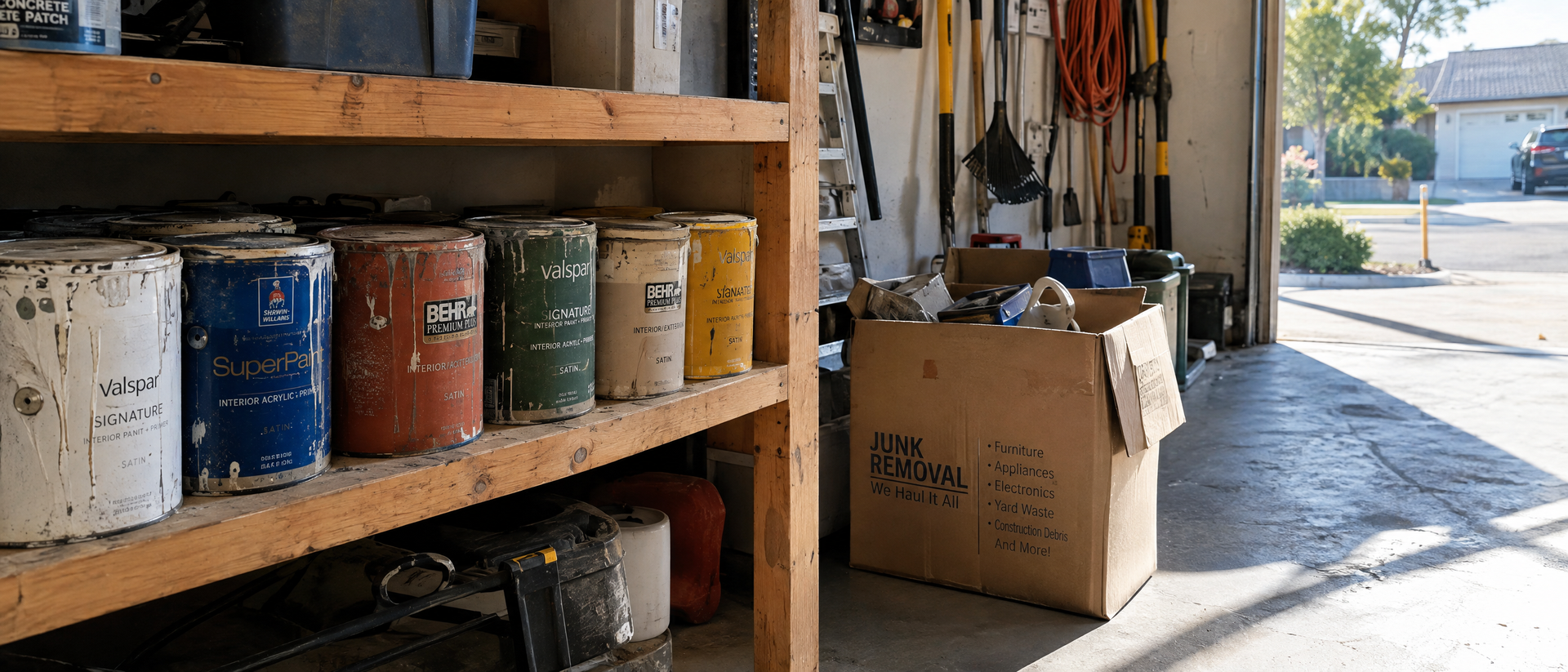
This is exactly the kind of item that's easy to forget about during a bigger cleanout — a garage purge, an estate cleanout, or clearing out a property after a move often turns up an old tank from a grill, a camper, or a patio heater nobody remembers buying. Rather than making a separate trip to a hazardous waste facility for one tank while we handle everything else, a full-service pickup that properly accounts for propane tanks as part of the load means you're not left holding onto the one item that doesn't fit into a normal trash day.
Found an old propane tank while clearing out your garage, patio, or a property you're cleaning out?
We handle it properly, not just the easy stuff.
Free quotes: (619) 792-1285.